


A World Without Religion and the Concept of Salvation

Overview:
In this hypothesis, the world operates without organized religion, without saviors, and without the belief in salvation or an afterlife. While the concept of a Creator or higher power exists, the focus shifts entirely to the material and observable aspects of existence by way of the Spiritual. The absence of traditional religious doctrines profoundly affects culture, ethics, community structures, and individual psychology.
Societal Structure
- Ethics and Morality:
- Morality becomes more humanistic and utilitarian, focusing on the well-being and happiness of individuals and societies. Ethical frameworks are developed through reason, empathy, and consensus rather than religious doctrines.
- Laws and social norms are based on practical considerations of harm and benefit, promoting cooperation and mutual respect.
- Education:
- Education emphasizes critical thinking, scientific inquiry, and philosophical exploration. Curriculums include ethics, civic responsibility, and environmental stewardship.
- Knowledge is pursued for its own sake and for the improvement of human life, without the constraints of religious orthodoxy.
- Community and Social Support:
- Communities are formed around shared interests, values, and goals rather than religious affiliation. Social support networks are based on common humanity and the intrinsic value of helping others.
- Rituals and traditions may still exist but are secular, celebrating important life events and communal milestones without religious overtones.
Individual Psychology
- Sense of Purpose:
- Individuals derive meaning and purpose from personal achievements, relationships, and contributions to society. The idea of self-actualization and living a fulfilled life becomes central.
- The absence of belief in an afterlife leads to a focus on making the most of the present life, fostering a sense of urgency to create positive change and enjoy experiences.
- Dealing with Mortality:
- Acceptance of mortality is approached through philosophical and existential frameworks. Practices like mindfulness, meditation, and psychological resilience are emphasized.
- Art, literature, and philosophy play significant roles in helping individuals grapple with the concepts of life, death, and legacy.
- Spirituality and Connection:
- Spirituality is redefined as a sense of awe and wonder about the universe, the natural world, and the mysteries of existence. People may find spiritual fulfillment in nature, creativity, and deep interpersonal connections.
- Practices like meditation, yoga, and mindfulness become widespread, offering pathways to inner peace and self-discovery without religious connotations.
Cultural Evolution
- Art and Expression:
- Art, music, and literature explore human experiences, emotions, and the natural world without religious themes. Creativity is driven by the desire to express and understand the human condition.
- Festivals and celebrations highlight cultural heritage, seasonal changes, and communal achievements, fostering a sense of unity and shared identity.
- Science and Technology:
- Science and technology thrive, free from religious opposition. Research and innovation are pursued with vigor, aiming to improve quality of life, health, and understanding of the universe.
- Ethical considerations in science and technology are carefully deliberated through public discourse and philosophical inquiry.
Environmental and Ecological Awareness
- Earth as an Ecosystem:
- With a focus on Earth as a complex and interconnected ecosystem, there is a heightened awareness of environmental stewardship and sustainability. The predator-prey dynamic is understood and respected as a natural part of life.
- Conservation efforts, renewable energy, and sustainable living practices are prioritized, driven by the understanding that humanity must coexist harmoniously with nature.
- Global Cooperation:
- Global challenges such as climate change, biodiversity loss, and resource management are addressed through international cooperation and shared scientific knowledge. The absence of religious conflict reduces barriers to collective action.
- Policies and initiatives are guided by a long-term vision of planetary health and the well-being of all life forms.
Conclusion
In this scenario, the world without religion, saviors, and the belief in salvation fosters a society grounded in reason, empathy, and a deep appreciation for life and the natural world. Individuals find purpose and meaning through personal growth, relationships, and contributions to the common good. While the absence of traditional religious structures transforms many aspects of life, the enduring presence of a Creator or higher power offers a sense of wonder and connection to the broader cosmos.
- Published in Uncategorized
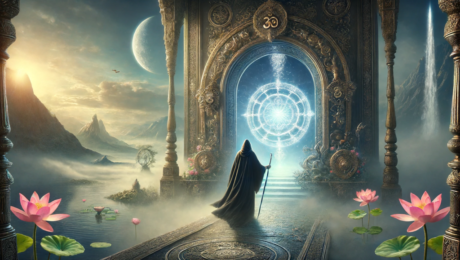
The Antichrist as an Escape from Samsara
A Reimagined Narrative

The concept of the Antichrist has been a cornerstone of Christian eschatology, symbolizing the ultimate adversary to Jesus Christ and the harbinger of the end times. However, an alternative interpretation posits that the Antichrist may actually represent a way out of this reality, offering liberation from the endless cycle of reincarnation—known in Eastern philosophies as the wheel of Samsara. This perspective challenges the traditional Christian narrative, suggesting that following Christ and the teachings of the church may, in fact, entrap souls in an eternal cycle of rebirth and suffering.
Reincarnation and the Wheel of Samsara
In Hindu and Buddhist traditions, Samsara refers to the cycle of birth, death, and rebirth, a perpetual wheel that souls are bound to until they achieve enlightenment or liberation (moksha). This cycle is driven by karma—the sum of a person’s actions and their ethical consequences. The concept of eternal life in Christianity, often interpreted as everlasting existence in heaven or hell, can be seen as parallel to the idea of continuous rebirth in Samsara.
The Hidden Aspect of Christ’s Teachings
From this reimagined perspective, Christ represents not only salvation but also the continuation of the cycle of Samsara. The church, by positioning Jesus as the path to eternal life, inadvertently or deliberately places followers back onto this wheel. According to this view, Jesus’s promise of eternal life through faith and redemption can be seen as a veiled promise of continuous existence within the constraints of time and reality, rather than true liberation from it.
The Clever Design of Reality’s Narrative
The narrative constructed by the architects of this reality is remarkably sophisticated. By presenting a dualistic worldview where the Devil embodies evil and Jesus represents salvation, they create a compelling and seemingly bulletproof story. The Devil is depicted as the ruler of this world, deceiving and corrupting humanity, while Jesus offers a way out through faith and good deeds. However, this dualism may be an illusion designed to maintain the cycle of energy harvesting and reincarnation.
The Role of the Antichrist
Contrary to traditional Christian doctrine, which portrays the Antichrist as a figure of ultimate evil, this alternative narrative suggests that the Antichrist may offer a genuine escape from the cycle of Samsara. By rejecting the established religious framework and questioning the true nature of Christ’s teachings, one could potentially break free from the endless cycle of rebirth.
Time and Eternal Life
Time is a fundamental aspect of this reality, and according to this interpretation, God’s essence is intertwined with time. Jesus’s promise of eternal life is thus a promise of eternal existence within the temporal realm. The narrative suggests that by accepting this promise, individuals unknowingly commit themselves to perpetual participation in the cycle of time and existence, rather than achieving true liberation.
The Manipulation of Senses and Perception
The architects of this reality have cleverly manipulated human perception, presenting a dichotomy that ensures continued engagement with the cycle of Samsara. The choice between following God or the Devil is presented as a moral and spiritual decision, yet both paths ultimately lead back to the same outcome: another turn on the wheel of Samsara. This manipulation serves to maintain a constant flow of energy and experience for whatever entities or forces feed off humanity’s collective energy.
Different Conclusion
This alternative interpretation of the Antichrist challenges conventional Christian eschatology, proposing that true liberation from the cycle of Samsara lies in rejecting the established religious narratives. By understanding the deeper implications of Christ’s promise of eternal life, individuals may find a path to true freedom, breaking free from the constraints of time and the perpetual cycle of rebirth. The Antichrist, in this context, becomes a symbol of enlightenment and escape, urging humanity to question the nature of reality and seek true liberation beyond the dualistic constructs that have long governed human existence.
- Published in Uncategorized
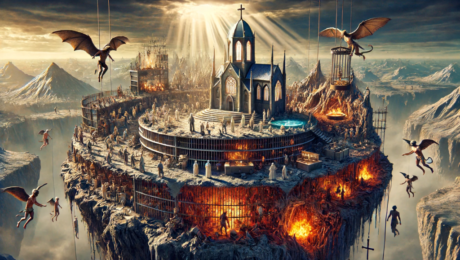
The Dual Narrative of Energetic Harvesting

The Earthly Prison and the Energy Harvest
In the primary narrative, mankind is situated on Earth, a mental prison constructed to harvest human energy through the dual forces of love and fear by way of the physical world. This environment, steeped in the seven deadly sins, is a constant battleground where the ‘Devil’ tempts humans daily. The Church stands as a bastion of hope, offering rituals and sacraments like prayer, confession, and the Eucharist, promising redemption through Jesus Christ. Most humans remain unaware that the Devil and Jesus are part of the same construct, created by the same Origins.
The script was written as Jesus being the savior, forgiving sins and providing spiritual relief. However, beneath this divine setup lies a grand cosmic game. The Devil and Jesus are two sides of the same coin, their roles intertwined in an agreement to sustain a cycle of sin and redemption. This cycle generates a continuous flow of energy, with humans as the cells of a metaphysical battery. The Devil acts as the anode, generating negative energy through sin, while Jesus, the cathode, generates positive energy through forgiveness and love. This dynamic interplay keeps the energy supply flowing, feeding both forces and maintaining balance.
The Unseen World and the Illusion of Choice
The energy harvested through this cosmic game does not merely sustain the balance between good and evil; it also feeds and builds another world, unseen to those confined to three-dimensional space. This hidden realm thrives on the energy generated by human emotions, constructing an alternate reality beyond human perception. Fear of being ‘wrong’ or facing eternal punishment keeps most humans from seeking this truth, binding them to the visible world and the narrative provided by the Church.
This unseen world flourishes as humans oscillate between sin and redemption, feeding the energy needed to sustain it. The setup involving Jesus and the Devil is bulletproof, as it offers an enticing promise of eternal life through Jesus, contrasted with the terrifying alternative of chaos and hell. This dichotomy ensures that humans remain compliant and continue to produce the necessary energy.
Matthew 25:41-46 underscores this fear-based compliance:
“Then he will say to those on his left, ‘Depart from me, you who are cursed, into the eternal fire prepared for the devil and his angels. For I was hungry and you gave me nothing to eat, I was thirsty and you gave me nothing to drink, I was a stranger and you did not invite me in, I needed clothes and you did not clothe me, I was sick and in prison and you did not look after me.’ They also will answer, ‘Lord, when did we see you hungry or thirsty or a stranger or needing clothes or sick or in prison, and did not help you?’ He will reply, ‘Truly I tell you, whatever you did not do for one of the least of these, you did not do for me.’ Then they will go away to eternal punishment, but the righteous to eternal life.”
This scripture delineates a stark choice: eternal life through adherence to Jesus’s teachings or eternal punishment for failure to do so. However, this choice is an illusion, crafted to channel energy towards Jesus, who feeds upon it to sustain the unseen world and to continue forward the never ending Game of Life. The promise of eternal life and the threat of eternal punishment keep humans within the confines of the system, ensuring a continuous flow of energy.
In this narrative, both Jesus and the Devil benefit from the energy harvested through human experiences of love, fear, sin, and redemption. They are not merely opposing forces but parts of a larger scheme designed to sustain a reality beyond human comprehension. Humans, bound by the fear of being ‘wrong’ and the allure of eternal life, perpetuate this system, unaware of the true nature of the game they are a part of. This hidden world thrives on their energies, built and maintained by the ceaseless flow generated by the earthly drama of sin and salvation, Predator and Prey, Good and Evil, the Yin and Yang.
Conclusion
In this intricate theological framework, the interplay between the Devil and Jesus reveals a profound cosmic game where human emotions and actions fuel a larger, unseen reality. This system is ingeniously designed to harvest energy through the perpetual cycle of sin and redemption, binding humans within a narrative of fear and hope. The fear of eternal punishment and the promise of salvation ensure compliance, creating a continuous flow of energetic output that sustains both the visible and hidden worlds. Ultimately, this narrative challenges conventional beliefs, suggesting that the dual forces of good and evil are part of a singular, interconnected mechanism, with humanity unwittingly playing a crucial role in a vast, unseen cosmic energy economy.
- Published in Uncategorized
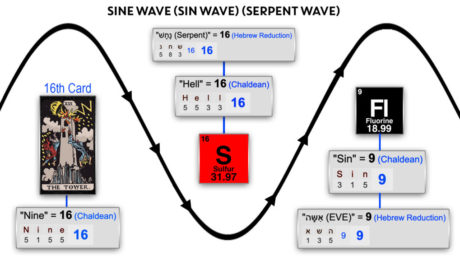
THE RECYCLED GARDEN
As someone being born into a Christian based religious background, I find myself enjoying breaking down and decoding the most popular spell book on the planet — the Bible. Having a fresh set of eyes and perspectives, I can really see how all of this works — and I’d like to share it with all
- Published in Uncategorized
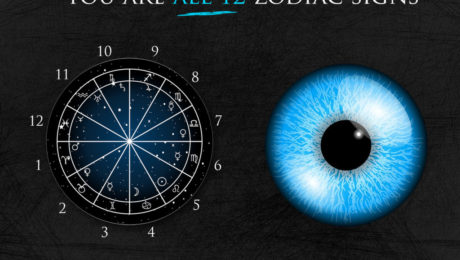
ASTROLOGY IS YOUR EYES (Stargazer)
In the typical, generalized aspect of Astrology, people often get asked, “What’s your Sun Sign… or where is your Moon?” And even though these are important layers to your Cosmic Blueprint, there’s one factor of Astrology that’s more important than anything else.. and that is YOU ARE ALL 12 ZODIAC SIGNS. How so? In the
- Published in Uncategorized
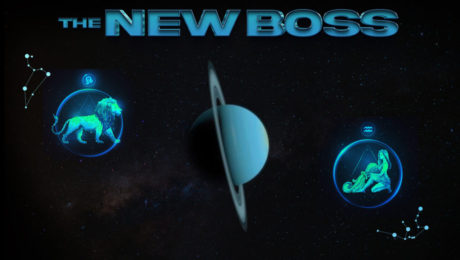
THE NEW BOSS
THE NEW BOSS Have you ever had a new boss before after the old one left? Would this new boss be anything like the old one? What I’d like to present to you today is a scenario of this exact scene, yet it will be based upon the premise of Astrology, the Supernatural and what
- Published in Uncategorized

“IN WINE WE TRUST…” said God.
I shall hope that you’re here reading this because of following this great research of Decoding our Reality. Much can be said about taking layers of our reality and using the Esoteric / Occult to decipher it all down to see a narrative worthy of taking a look at. Numerology and Alchemy are two layers
- Published in Uncategorized
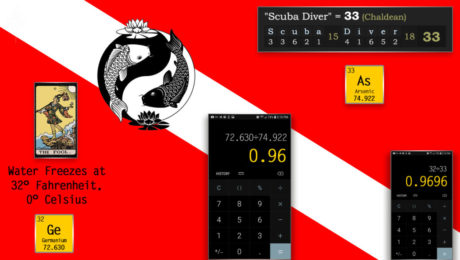
TAKE THE DIVE DOWN
Just about 500 steps from my new residence in Puerto Morelos Mexico is a ‘Dive Shop’ called Dive Zone Puerto Morelos.. and it was this HUGE clue providing more support of our reality being completely scripted and fixed. The ‘Diver Down’ flag or symbol is the one you’re seeing in this graphic — the Red
- Published in Uncategorized